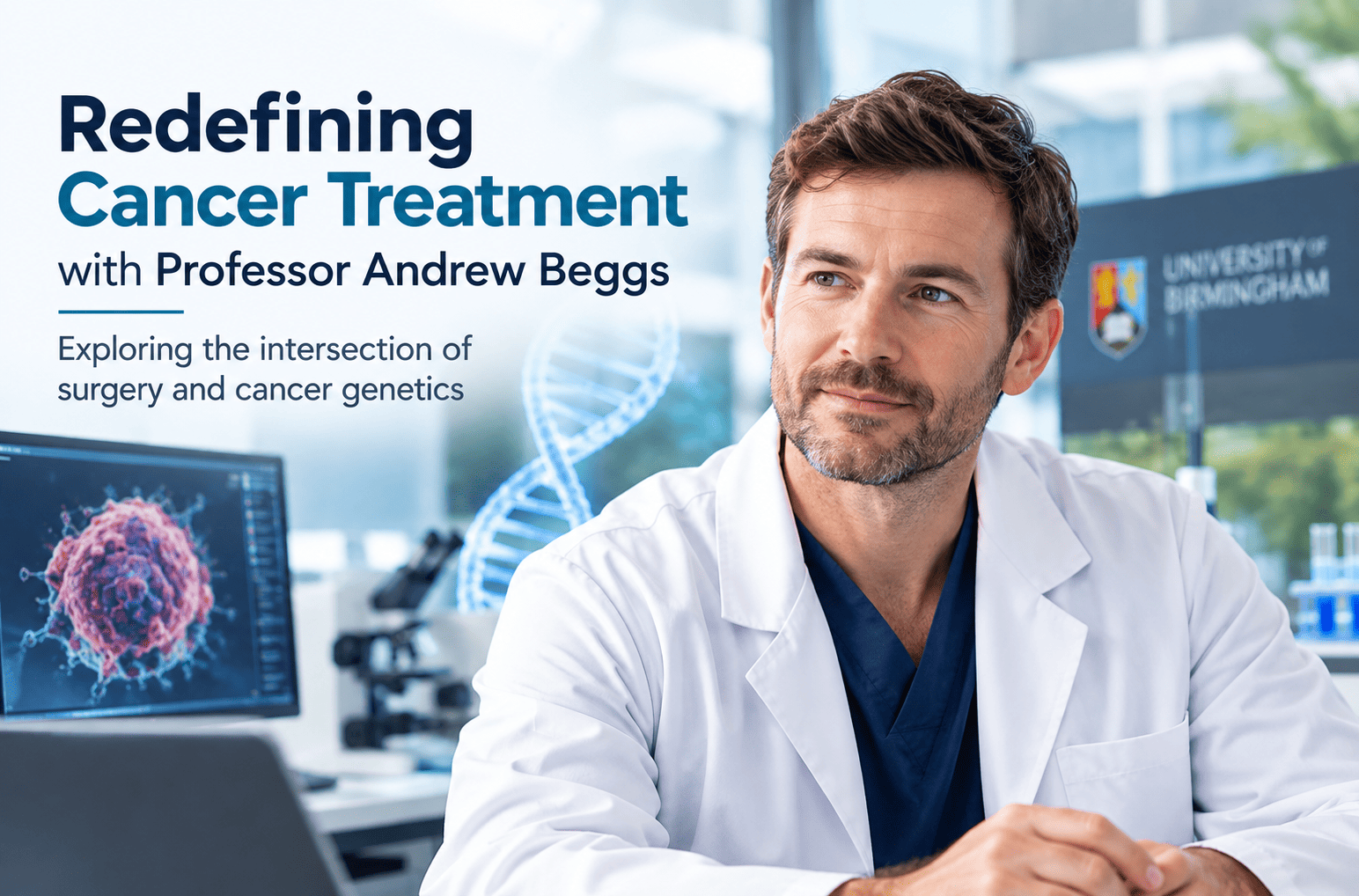
Redefining Cancer Treatment with Professor Andrew Beggs
Exploring the intersection of surgery and cancer genetics
Have you ever stopped to wonder if the way we’ve been fighting humanity’s absolute deadliest disease is completely wrong? For generations, cancer treatment has essentially been a war of blunt force. We cut tumours out, we burn them with radiation, and we flood the human body with harsh chemicals, just hoping the good cells outlast the bad.
But what if the real key to beating cancer isn’t hidden inside a massive pharmaceutical pipeline, but encoded right inside the microscopic language of your own individual DNA?
Today, I had a profound conversation with Professor Andrew Beggs, a pioneer at the forefront of precision oncology, who operates at the intersection of surgery and genetics. Andrew is not just a consultant colorectal surgeon; he is also deeply involved in cutting-edge research at the University of Birmingham. He showcases how innovative techniques, like growing 3D mini tumour avatars to test treatments, are revolutionizing cancer care.
The Dual Role: Surgeon and Scientist
Andrew describes his dual role with passion: “I have the best job in the world… our ultimate ambition is to turn cancer into a chronic disease rather than something that kills you.” This ambition drives him to blend surgical practice with scientific discovery, allowing him to tackle cancer from both immediate and long-term perspectives.
Defining Moments and Early Doubts
Andrew shared his journey and the moments of self-doubt that shaped him. He recalled a time when he faced rejection during his medical training, leading him to question his path. “Everybody has a lot of doubt. Anyone who says they don’t is lying to you,” he said. This honesty about vulnerability is refreshing, and it serves as a reminder that even the most accomplished professionals have faced hurdles.The Spark for Cancer Genetics
His interest in cancer genetics ignited when he met his PhD supervisor, who helped him see the excitement in genetics. “It’s a set of instructions that drives a cell, and one little change can make everything go wrong,” he explained. This realization, coupled with the advent of whole genome sequencing, pulled him into the fascinating world of cancer research.Andrew’s work is not just about treating cancer; it’s about reshaping the future of cancer care through innovation and research. His story is a testament to human grit, unrelenting curiosity, and the future of survival itself.
As we reflect on this conversation, it’s clear that the fight against cancer is evolving. The intersection of surgery and genomics holds immense potential, and leaders like Andrew Beggs are paving the way towards a future where cancer can be managed as a chronic disease rather than a death sentence.
For those interested in learning more about Andrew’s impactful journey and the revolutionary changes in cancer treatment, I invite you to listen to the full episode of this enlightening discussion.