
Artificial Intelligence (AI) is revolutionizing the pharmaceutical industry, but many organizations still treat it as a mere add-on to existing processes. This blog will explore how a fundamental shift in thinking and structure is necessary for pharma companies to thrive in the age of AI.
Understanding the Waves of AI Evolution
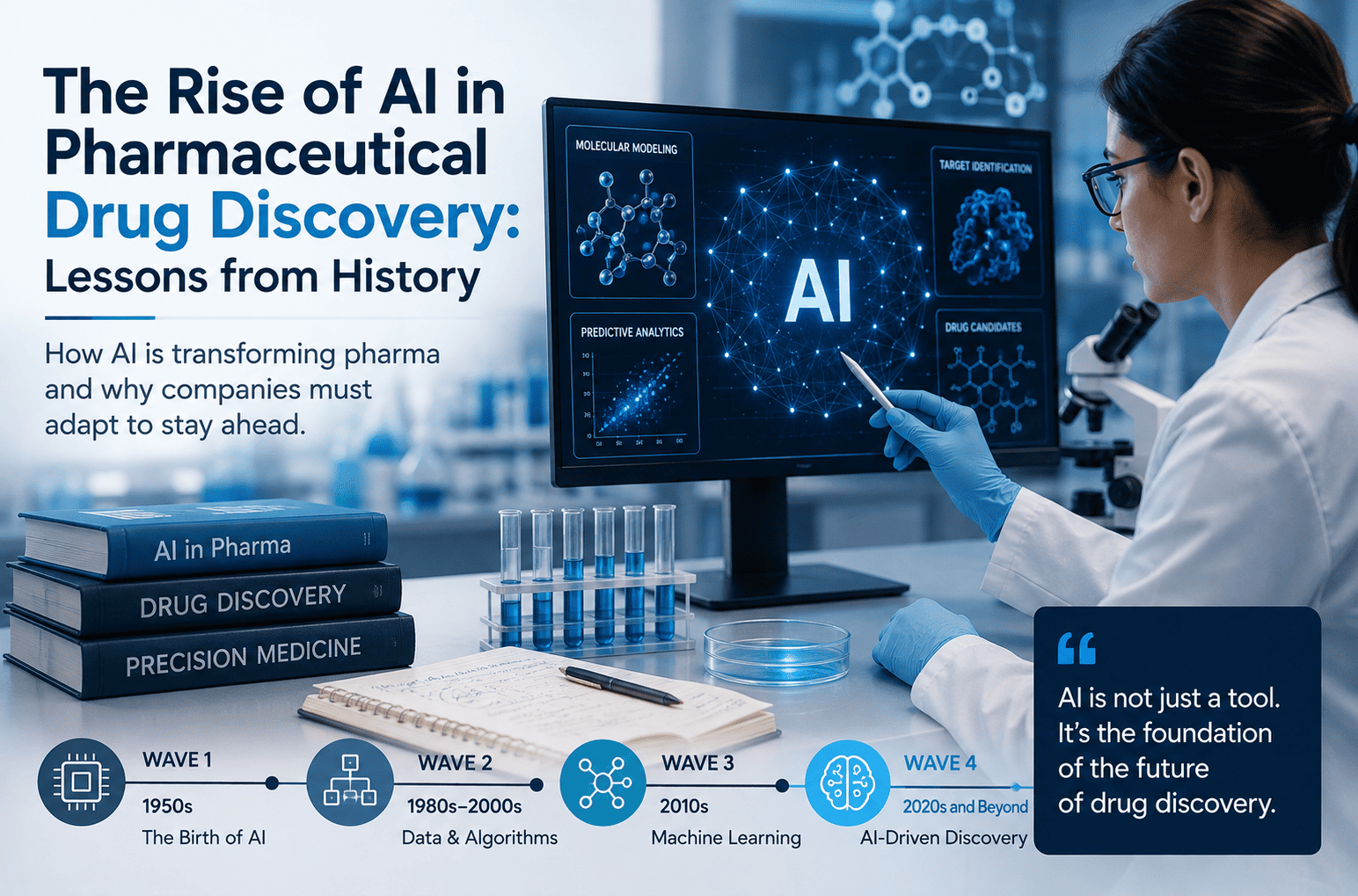
David Brown, a seasoned expert in pharmaceutical R&D, discusses the evolution of AI through four distinct waves. The first wave began in the 1950s, marking the inception of AI technologies, while the current fourth wave is characterized by advanced machine learning algorithms and large language models (LLMs). This development has significantly impacted drug discovery methods, shifting from traditional approaches to ones that leverage AI for increased efficiency and effectiveness.
The Importance of Integrating AI into Pharmaceutical Structures
Brown emphasizes that AI must not simply be a bolt-on technology but should serve as the foundation of pharmaceutical organizations. He draws parallels between the structural changes needed in pharma and historical examples, such as Kodak’s failure to transition to digital photography. Companies that fail to adapt to AI-driven methods risk obsolescence as more innovative biotechs emerge.
Case Study: Viagra’s Unexpected Success
One of the most compelling stories shared by Brown is that of Viagra. Originally developed for angina treatment, the drug’s real efficacy was discovered serendipitously. This highlights the unpredictable nature of drug discovery and the importance of being open to new possibilities, especially when leveraging AI insights in research.
Lessons from the Past: The Dangers of Complacency
The downfall of major pharmaceutical companies like GlaxoSmithKline serves as a cautionary tale. Despite once being industry leaders, their stagnant market caps reflect a failure to innovate and adapt. In contrast, tech giants like Apple and Nvidia have thrived by embracing cutting-edge technologies. The pharmaceutical industry must learn from these examples to avoid stagnation.
Key Takeaways for Pharmaceutical Leaders
1. **Embrace AI as a Core Element**: Transitioning to an AI-driven model is not optional; it is essential for remaining competitive.
2. **Learn from Historical Mistakes**: Companies must recognize the importance of adapting to change, lest they suffer the same fate as Kodak.
3. **Foster a Culture of Innovation**: Encouraging experimentation and risk-taking can lead to breakthroughs that were previously unimaginable.
Conclusion
As the pharmaceutical industry stands at a crossroads, the integration of AI into its core processes is more crucial than ever. Companies must rethink their structures and embrace the inevitable changes brought by AI to not only survive but thrive in the future of medicine. For further insights, consider exploring related topics on our blog.